Outdoor & Event Lighting
Does Permanent Lighting Need HOA Approval in Idaho?
TL;DR
- The holiday decorations clause in your CC&Rs probably does not cover this. Those rules govern temporary displays. Permanent lighting is an exterior modification, which is a different category entirely.
- That means it almost certainly needs architectural review approval before anything goes up.
- Installing without approval is the expensive mistake. A board can require removal of an unapproved modification.
- Most approvals are straightforward. Expect a written application, a 30 to 45 day response window, and possibly a small review fee.
- The objections boards have are usually objections to seasonal lights, not to this. Warm white by default, invisible in daylight, nothing left sagging in March.
- If you are denied, ask for the reason in writing and check it against the actual guidelines. Idaho gives homeowners real procedural protection on enforcement.
- Read your own governing documents. Every community is different and yours is the only one that matters.
The clause that does not cover you
Almost every set of CC&Rs has something about holiday decorations. Usually it sets a window, something like the day after Thanksgiving until mid-January, and sometimes it limits colors or prohibits anything that blinks.
Homeowners read that, decide permanent lighting falls under it, and go ahead. It is a reasonable assumption and it is usually wrong.
Holiday decoration rules govern temporary displays. Permanent lighting is fixed to the structure and stays there, which puts it under your association's architectural control provisions instead. Those are the rules that cover paint colors, fencing, roofing and anything else that changes how your house looks from the street. Different section, different process, different committee.
The practical consequence is significant. An exterior modification made without approval can be reversed at the board's direction, which means a system you have already paid for coming back off the house. That is the outcome this post exists to help you avoid, and it is entirely avoidable.
What approval actually involves
Less than most people fear. The process is well established because associations run it constantly for decks, fences and paint.
You submit a written application to the architectural review committee, sometimes called the architectural control committee or design review committee. Most associations have a standard form. It generally asks for a description of the project, the materials, the colors, the contractor, and supporting photos or drawings.
The committee reviews it against the written standards in your CC&Rs or a separate architectural guidelines document.
You get a decision in writing: approval, conditional approval, or denial.
Typical timelines run 30 to 45 days, and some jurisdictions treat a non-response within the stated window as automatic approval. Review fees of $50 to $250 are common, though many associations charge nothing for something this small. The board usually holds final authority and can override the committee, which matters mostly on appeal.
Two things worth knowing about how the system is supposed to work. Committees are meant to apply written, objective standards rather than personal taste, and their decisions should not be arbitrary. And you are entitled to see the guidelines they are applying.
What boards actually object to, and why this answers it
Here is the part most homeowners miss, and it is the strongest argument you can make.
Read the exterior lighting and decoration rules in almost any set of CC&Rs and a pattern emerges. Boards restrict brightness. They restrict color temperature. They limit or prohibit blinking, flashing and animated displays. Many communities allow only white or warm white. And nearly all of them set removal deadlines, because the thing associations genuinely dislike is the house that still has sagging strands up in March.
Every one of those rules exists because of seasonal string lights.
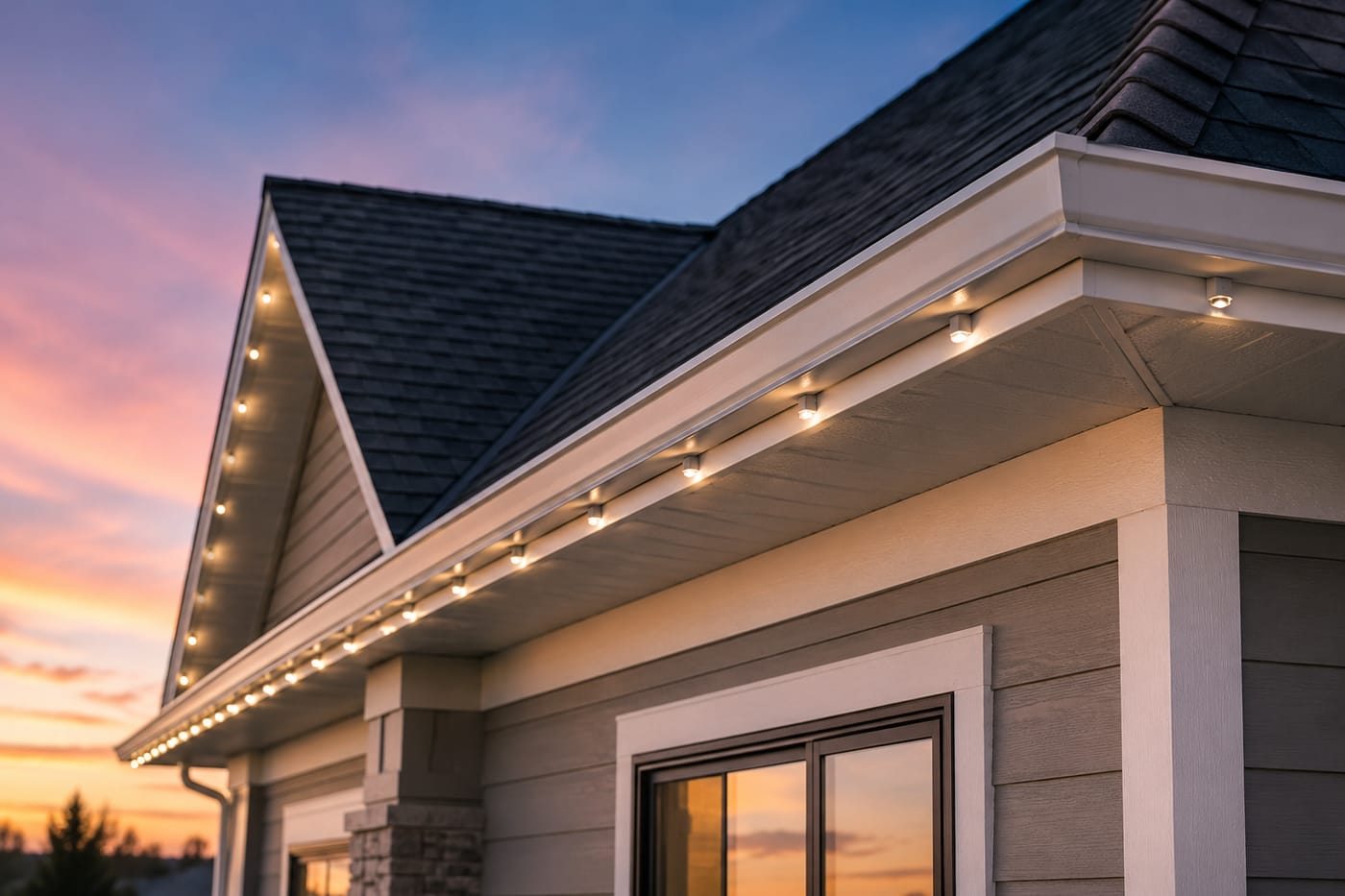
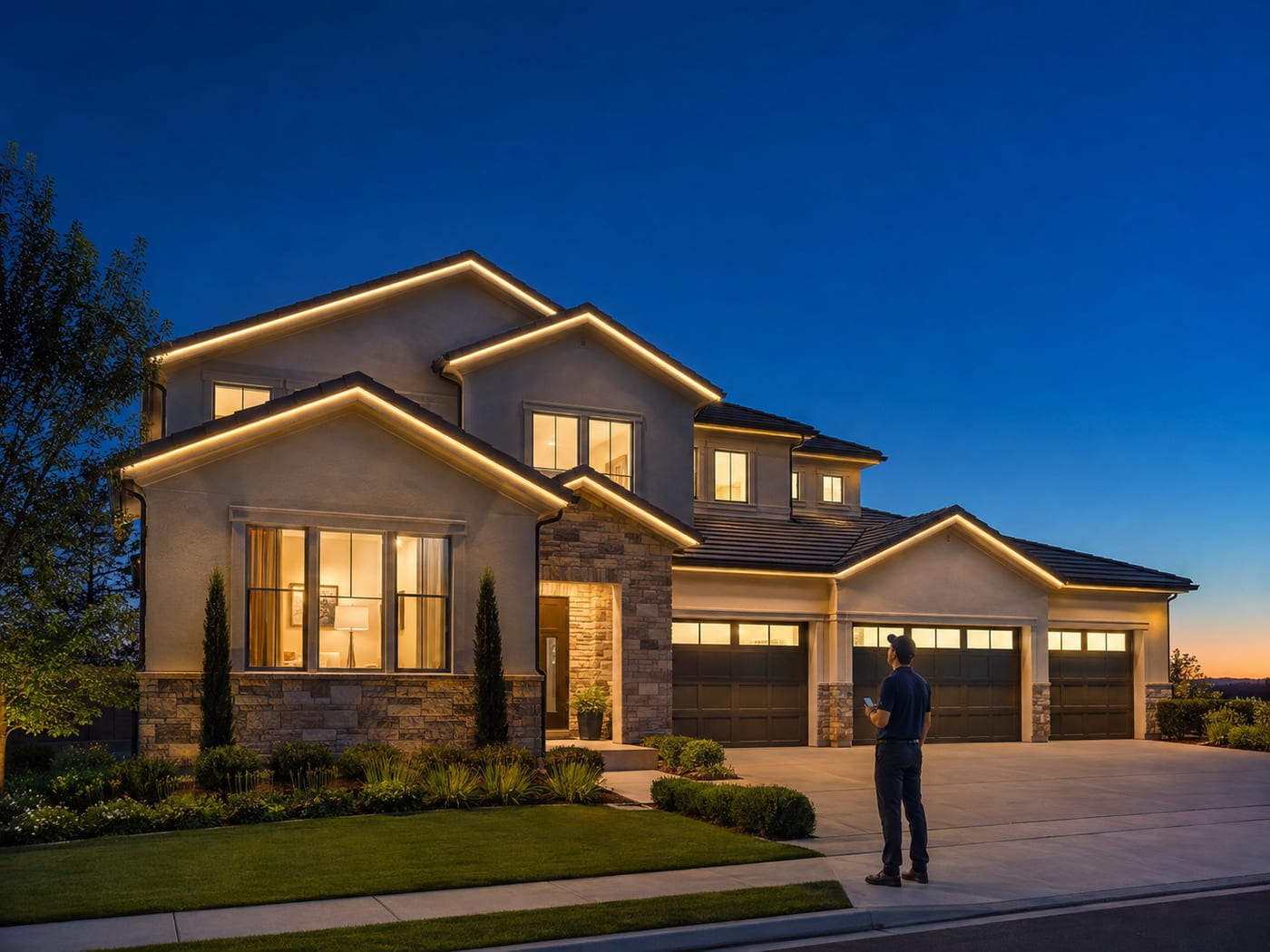
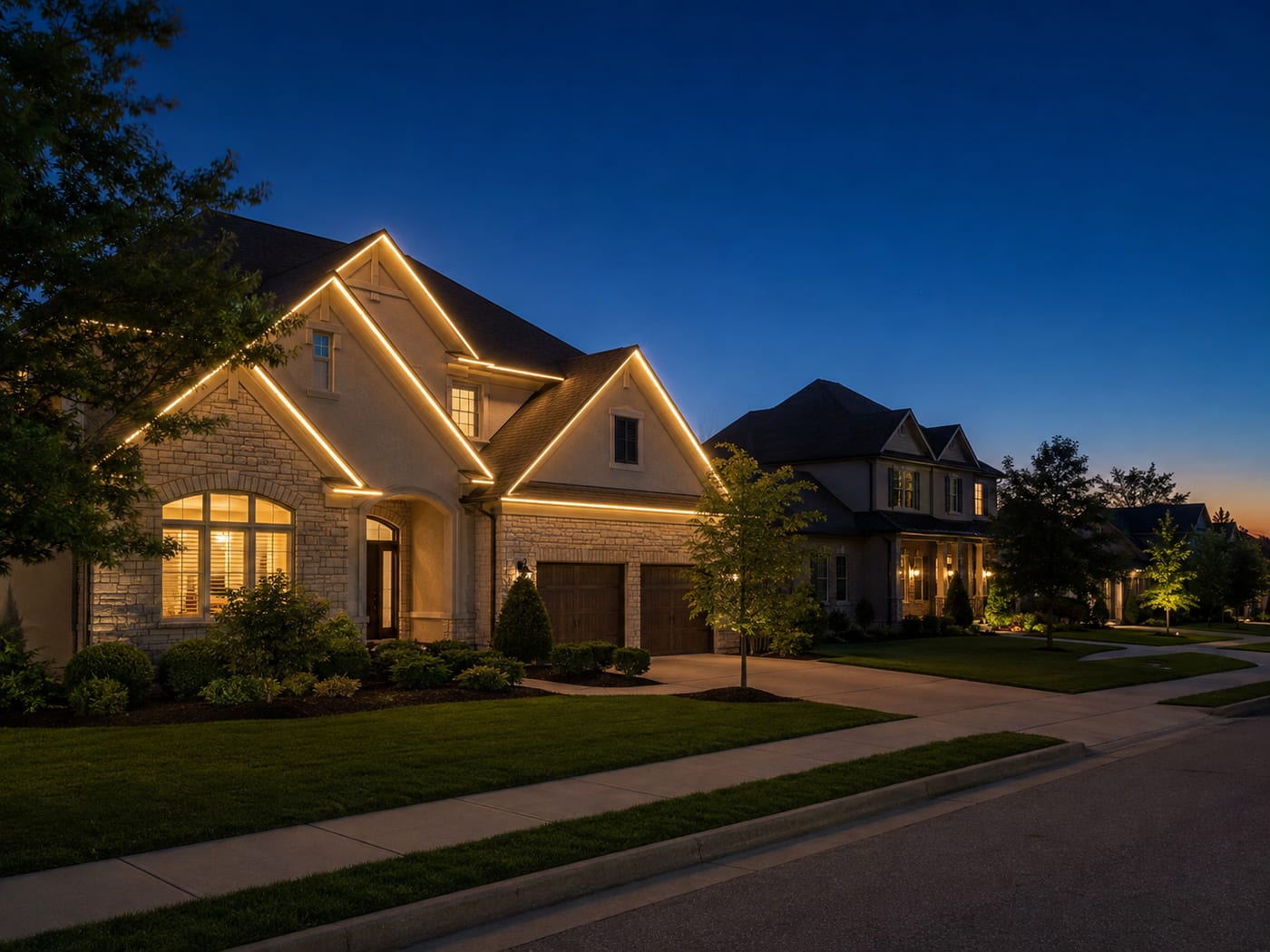
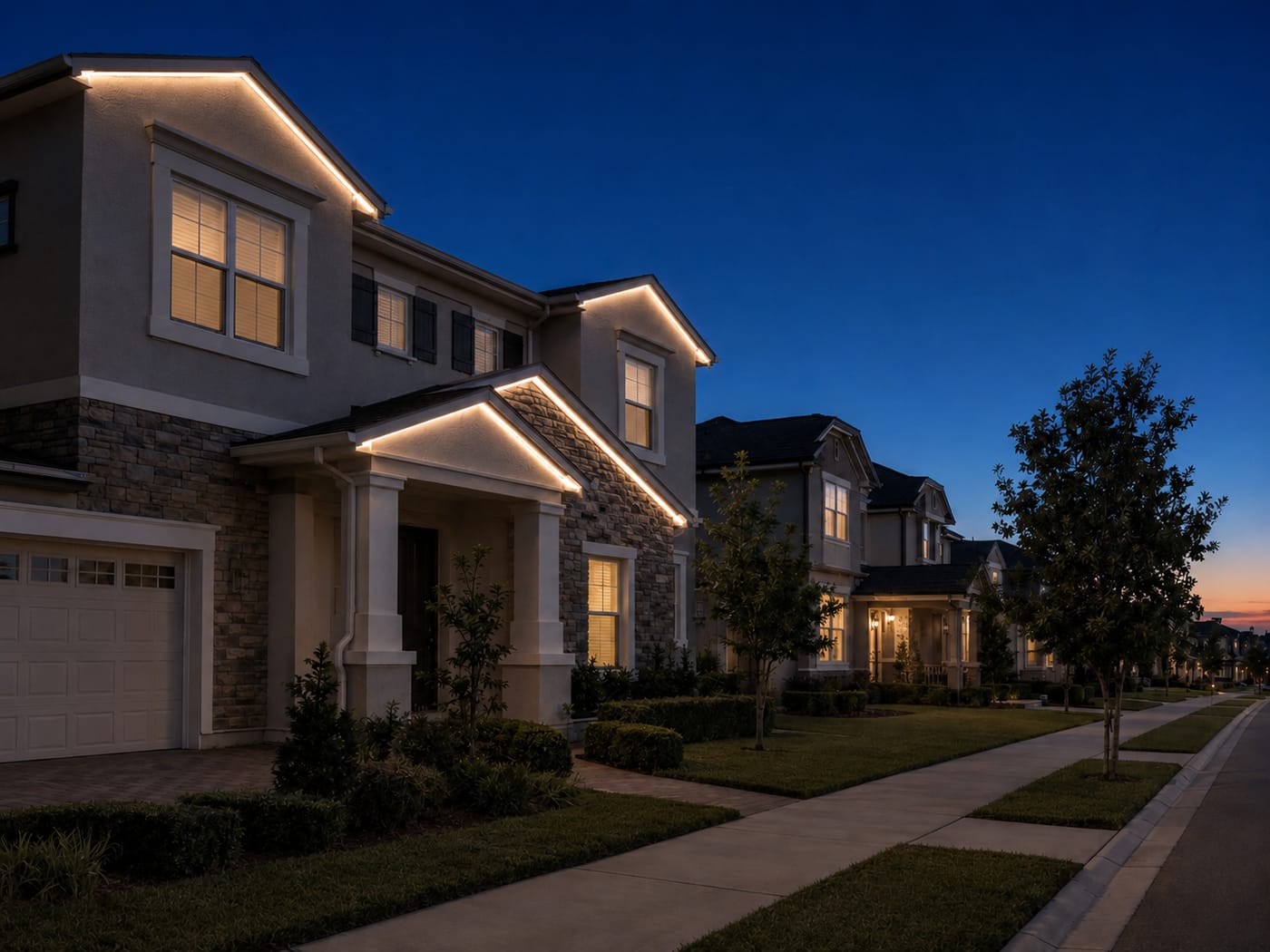
Now consider what a permanent system actually does. It is fitted into the eave line and color-matched to your trim, so in daylight there is very little to see. Its default setting is warm white, which is what most owners run most nights and which is precisely the color most restrictive covenants permit. It does not sag, because there is nothing to sag. It does not get left up looking untidy, because it is not up in the visible sense at all. And it can be switched off completely.
So the case to your committee is not that they should make an exception. It is that this addresses the problem their rule was written to solve. A neighborhood where people run warm white eaves and switch to color for a few evenings a year looks considerably more orderly than one where half the houses have staples and strands still on the fascia in spring.
Some boards will not have considered permanent lighting at all, because their documents predate the product. Being the person who explains it clearly is usually an advantage rather than a problem.
What to put in a submission
Give the committee an easy yes. Most denials come from thin applications rather than genuine objections.
- A clear description of what is being installed. Slim aluminum track fitted to the fascia or soffit, color-matched to existing trim, with low-voltage LED lighting and a controller.
- Where it goes and how it attaches. Committees care about permanence and visibility. State plainly that it fastens to trim boards, not to the roof surface.
- The color match. Name the trim color it will be matched to. This resolves the aesthetic question before it gets asked.
- Daylight photos. More persuasive than night photos, because daytime appearance is what the committee is actually being asked to approve.
- A night photo of the default setting. Warm white, not a color display. Lead with the everyday look.
- How you intend to use it. If you plan to run warm white routinely and reserve color for holidays and occasions, say so. Some homeowners voluntarily propose limits, and boards respond well to it.
- The contractor. Who is doing the work and that they are local.
- Linear footage, if your documents reference length thresholds. Some do.
If your governing documents are silent on permanent lighting, say that in the application and ask the committee to consider it under the general architectural standards. Silence is not permission, but it does mean nobody has ruled against you.
If you are denied
First, ask for the specific reason in writing. A denial should identify what standard the proposal failed and, in most communities, describe how to appeal.
Then check that reason against the actual guidelines. Denials commonly rest on standards that are not in the documents, or get applied inconsistently with things already approved elsewhere in the neighborhood. Photographs of comparable approved modifications are genuinely useful here.
Appeal to the full board if the decision came from a committee. Treat it as a fresh case rather than a complaint. Address each stated reason with a fact or a solution, and offer compromise where you can. Proposing warm white only, or agreeing to a brightness ceiling, or limiting color use to defined periods, turns a lot of denials into conditional approvals. Boards find it much easier to approve a modified request than to reverse themselves outright.
Whatever the outcome, get it in writing and keep it.
On enforcement, Idaho homeowners have more protection than most. State law has been narrowing association power since 2014. An Idaho HOA cannot fine you unless its governing documents explicitly authorize fines, and even then it takes a majority board vote and written notice giving you 30 days to correct the issue. If you begin taking steps to resolve it, the fine is not valid, though it can be reinstated if you stop or never finish. Board meetings must also be open to members, so you can attend and speak.
But be clear about what Idaho does not do. The state protects solar panels, flags and political signs by statute. There is no equivalent protection for exterior lighting. You cannot claim a legal right to install this over your association's objection, and we would not advise anyone to try. The protections above concern how an association must behave, not whether it can say no.
None of this is legal advice, and we are not lawyers. If your situation gets complicated, talk to one.
Start by reading your own documents
Everything above is general. The only documents that govern your house are yours.
Find your CC&Rs and any separate architectural guidelines, and read the sections on exterior modifications, architectural review, and exterior lighting, not just the holiday decorations paragraph. If you cannot find them, your property manager or board secretary can provide them, and in Idaho recorded CC&Rs are also filed with county land records.
We can help you put the picture together
We walk the property, measure the roofline, confirm the trim color and talk through what the system would look like on your specific house, day and night. That is the same information an architectural committee asks for, so a quote visit gives you most of what you need for a submission whether you go ahead with us or not.
Free quote, no obligation. Get in touch or call (208) 242-4252.
Frequently asked questions
Does my HOA's Christmas lights rule cover permanent lighting?
Usually not. Those clauses govern temporary seasonal displays. Permanent lighting is fixed to the house and falls under architectural control provisions instead, which is a separate approval process.
Do I really need approval before installing?
In an HOA community, almost certainly. Exterior modifications typically require architectural review approval, and a board can require removal of something installed without it. Check your governing documents before you commit to anything.
How long does HOA approval take?
Commonly 30 to 45 days from a complete application, though it varies by community. Some associations treat a failure to respond within the stated window as approval. Your documents will specify.
What if my CC&Rs do not mention permanent lighting at all?
Many do not, because they predate the product. That is not permission, but it does mean you are not up against an existing prohibition. Submit under the general architectural standards and explain the product clearly.
Can my HOA restrict the colors I use?
Yes, and many do. Restrictions on color temperature, brightness, and blinking or animated displays are common, and some communities allow only white or warm white. A permanent system handles those limits well, since warm white is the default setting for most owners anyway.
What happens if I install without approval?
At minimum an enforcement letter. At worst a requirement to remove it. In Idaho a fine requires explicit authorization in the governing documents, a majority board vote, and written notice giving you 30 days to correct the problem, but none of that prevents the board from insisting the installation comes out.
Is exterior lighting protected by Idaho law the way solar panels are?
No. Idaho statute protects solar installations, flags and political signs from association prohibition. Exterior lighting has no equivalent protection, so approval is genuinely at your association's discretion.
Will an HOA-friendly setup limit what I can do with the system?
Rarely in practice. Most restrictions land on brightness, color temperature and animation, and most owners run warm white the majority of the time regardless. Color for holidays and occasions is usually the part nobody objects to.